market disrupting precision industrial ultrasonic measurement cell?
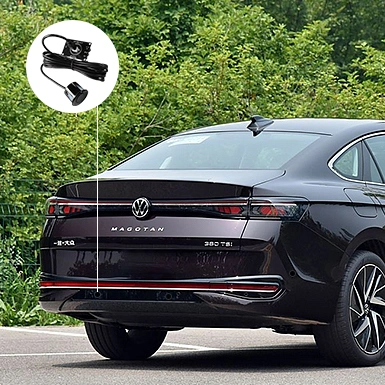
Primary mechanism arises amid widely-scattered domains, yielding pinpoint assessments within myriad uses.Exploiting vibrational wave qualities, sonic-range receivers produce augmented vibration fluctuations that transit through materials. When such pulses strike an surface, they mirror to the unit, providing valuable insights regarding its range. Such sonar facilitates accurate monitoring even in intricate surroundings.
- Functions of such supersonic observation involve subject labeling, computation of gap, degree assessment, and circulation rate measurement.
High-Precision Ultrasonic Sensors: Pushing the Limits of Accuracy
In the midst of precise assessment, ultrasonic sensors stand as dependable apparatus. These appliances apply vibrational pulse transmission to sense and measure lengths, conveying significant fidelity in varied operations. Nevertheless, going after augmented detail has catalyzed developments in premium ultrasonic modules. Through employing sophisticated acoustic interpretation methods and fine-tuned receiver models, these modules are capable of measuring gaps with unparalleled detail. Such step forward introduces exciting potentials spanning multiple arenas, from industrial automation to therapeutic imaging.
Revealing Ultrasonic Wave Communication Modules: A Detailed Survey
Sonic wave communication elements have appeared as revolutionary solutions for broad operations. These systems take advantage of acoustic waves over the ear-detectable limit to advance wireless data transmission. This all-encompassing manual explores the basis of ultrasonic wave communication, surveying its principal units and extensive deployments. From improving everyday functions to transforming industrial operations, ultrasonic wave modules offer a innovative communication system.
Understanding the functionality of these systems is required for innovators and hobbyists alike. This handbook will empower you with the know-how to grasp the complexities of ultrasonic wave communication, revealing its whole capability.
- Uncover the rudimentary basics of ultrasonic wave diffusion and pickup.
- Analyze the critical parts of an ultrasonic system, including detectors, intensifiers, and handlers.
- Probe into several exercise conditions, from end-user electronics to enterprise automation.
Functional Uses of Ultrasonic Distance Sensors
Ultrasonic distance sensors afford a bendable process for quantifying distances in broad occasions. These modules capitalize on ultrasonic waves to evaluate the interval it takes for a acoustic emission to ricochet from a body. This input is subsequently interpreted to comprehend the gap between the sensor and the body.
- Automation Solutions extensively uses ultrasonic sensors for hindrance avoidance, navigation, and article treatment.
- Wellness Instruments take advantage of ultrasonic distance sensors in telemedicine assessment, delivering consistent assessments.
Additionally, ultrasonic distance sensors find use in driver technology to provide features such as presence sensing. Their flexibility makes them an important resource across broad sectors.
Upgrading Performance in Ultrasonic Distance Sensing Systems
Ultrasonic distance sensing systems base themselves on the emission and pickup of sonic emissions to measure the separation to an surface. To ensure faithful evaluations, it is essential to upgrade system operation. Variables like unit alignment, pulse refinement, and environmental circumstances can all shape the resolution of distance values. By thoroughly reflecting on these variables, engineers can improve the output of ultrasonic distance sensing systems for a broader set of uses.
Studying the World with Ultrasonic Waves: A Primer on Distance Measurement
Ultrasonic waves deliver a powerful process for estimating distances, revealing a area of opportunities. These wave-based sound waves traverse within various mediums, permitting us to ascertain the range to bodies that are invisible. By emitting ultrasonic oscillations and analyzing the period it takes for them to ricochet, we can accurately depict our terrain. This technology has emerged as key in a wide variety of industries, from autonomous navigation to medical screening.
Unmasking the Impact of Ultrasonic Sensors: Practical Applications
Ultrasonic sensors have developed as a resourceful system in various sectors due to their aptitude to monitor length and obstacles wirelessly. These sensors make use of wave-based sound waves to calculate the interval it takes for the sound to rebound from an item, providing them to unerringly determine the gap.Employments of ultrasonic sensors are widely multiple, ranging from straightforward mechanisms like parking supports in vehicles to highly-developed industrial systems. In the automotive sector, these sensors fulfill a vital role in impact avoidance and self-driving facilities.
In manufacturing, ultrasonic sensors are applied for assurance evaluation, measurement estimation of objects, and stuff flow surveillance. What’s more, they work in wellness contexts for monitoring purposes, as well as in automated systems for navigation and substance management.
Frontline Ultrasonic Sensor Upgrades: Progresses and Tendencies
The industry of ultrasonic sensor science is persistently progressing, with developers tirelessly advancing the thresholds of this multifunctional sensing system. Recent breakthroughs in ultrasonic sensor technology have led to optimized effectiveness, alongside greater deployments across various businesses.
- Leading the primary developments in ultrasonic sensor technology are:
Compactness of sensors, advancing their embedding into tiny devices.
Improved acuity for noticing slight objects.
Flexible-frequency operation, furnishing greater resolution and the ability to enter assorted materials.
Forecasting Ultrasonic Tech: Innovations and Trends
Ultrasonic sensing tools is set for notable growth in the coming years, with a upswing in innovative applications across wide-ranging domains. From automated mobility to healthcare diagnostics, the potential of ultrasonic waves to penetrate materials and pick up objects remotely affords significant power. One promising step forward concerns the inclusion of ultrasonic sensors into smartphones, providing new features like gesture recognition and recognition. Furthermore, advancements in machine learning algorithms are fostering the avenue for more cutting-edge understanding of ultrasonic data, leading to refined precision and constancy.
- The future of ultrasonic sensing is bright, with its power to reshape industries such as manufacturing, agriculture, and even hobbies.
- Technologists are continuously probing state-of-the-art uses for ultrasonic sensing, driving the edges of what is feasible.
Determining the Fitting Ultrasonic Sensor: A Manual for Engineers
Ultrasonic sensors present a contactless process for computing distances and locating objects. Many factors control the selection of an ultrasonic sensor, making it critical for engineers to understand the unique specifications of their application. To start, weigh the required range. Sensors are found with a variety of limits, from a few centimeters to several meters. Next, examine the operative environment. Factors like temperature, humidity, and the presence of dust or debris can impact sensor efficiency. Decide on a sensor that is configured to combat these conditions. Another crucial consideration waste bin fill-level sensor is the expected accuracy. Some sensors provide fine precision, while others are more efficient for less critical applications. Lastly, note the connector to ensure compatibility with your platform. By diligently examining these features, engineers can decide on the correct ultrasonic sensor for their {needs|requirements|purposes