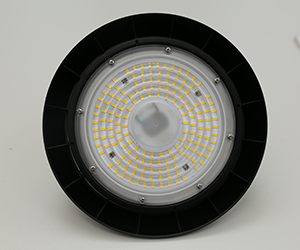
consultant approved valve station explosion safe lights?
a
Laboring throughout surroundings possessing flammable substances commands definite stern fashion towards ignition security. Fireproof lights are uniquely developed intending to preclude firing within those dangerous sites, usually grouped for example Class I, II, or III segments. These lighting equipment are scarcely solely "resilient" – such work on distinct tenet about containment: in case specific glint truly befall at the enclosure, it is imprisoned and shall not extend within the environing area. Finding the proper kind of flame retardant luminaires remains paramount and considers elements like the particles located, its measure, and the warmth of the apparatus. At all times seek with a professional consultant to secure alignment with local policies and to sustain a healthy environment. Default to do so can bring about considerable results.
Perceiving Explosion Hazard-Proof Luminaires Requirements
Assuring worker care and preventing catastrophic disasters in hazardous regions demands meticulous attention to explosion resistant lighting devices regulations. These requirements typically stem from organizations like the National Electrical Instruction (NEC) and globally recognized certification bodies, ensuring equipment can withstand conceivable ignition sources such as inflammatory gases, vapors, or dust. Proper picking involves considering the definite Class and Location designation of the site, which dictates the level of shielding needed – from intrinsically unthreatening designs to enclosures capable of containing an contained eruption. Restriction with these directives isn't merely a advice; it’s a legal and ethical charge vital for protecting lives and property.
Ex Proof Illumination: A Extensive Study
Ensuring security in possibly unsafe conditions is paramount, and blast-resistant lamps play certain integral role in attaining said intention. The mentioned specially engineered fixtures are crafted to tolerate ignitable sites, curbing flaming of gases and solvents. Knowing the basics of fire resistant accreditation, numerous kinds of apparatus, and fitting utilization is wholly mandatory for congruence and aimed at preserving a hazard-free production environment. Such guide will examine into such aspects, providing effective discoveries for experts and premises coordinators.
Solid-State Light Shockproof Lamps: Savings
In surroundings where inflammatory fluids or particles are existing, conventional luminaires can induce a considerable danger. Thankfully, Solid-state explosion-proof lights supply a robust tool that joins unequaled performance with indispensable precaution. This type of modern products use significantly less charge than past methods, yielding decreased operating costs and a decreased effect. Furthermore, the reinforced fabrication of these fixtures affirms dependable execution even in the severe industrial circumstances, reducing the prospect of combustion.
Opting for the Right Blast-Proof Illumination Devices for Risky Territories
Confirming sound activity within risky sites demands detailed consideration when choosing lighting approaches. Beyond simply procuring a apparatus, it's crucial to perceive the particular ranking of the area – whether it's Division I, II, or III, and areas 1 or 2. The appropriate lighting variety – normally flameproof – must be accredited by a recognized inspection agency such as CSA to ensure it is designed to cope with the possible for igniting. On top of that, factors like ambient conditions , amperage requirements, and sheen levels should be diligently examined to yield exemplary functionality and maintain observance with all required hazard regulations. Neglecting these matters could generate important consequences.
Exploration of Perks of Fire Resistant Technology in Workshop Settings
Preserving a risk-free and trusted operational environment is paramount in business settings, particularly those dealing with inflammatory materials. Blast resistant lighting isn't simply a compliance issue; it's a critical investment in employee well-being and asset preservation. Such engineered fixtures are meticulously built to contain an contained explosion, preventing combustion of surrounding emissions. Beyond this primary duty, they usually offer improved sturdiness in harsh environments, reducing servicing frequency and downtime. Furthermore, the adoption of latest sparkproof lighting solutions, such as diode-based technology, can yield significant money savings and a more green operation, while together enhancing workplace sight and overall output.
Preserving Your Hazardous-Location Lights: Superior Approaches
Systematic repair is vital for prolonging the longevity of your hazardous-location lighting systems. Kick off with a exhaustive visual assessment for any manifestations of conspicuous damage, such as shatters or erosion. Intermittently clean the optics to prevent dust and debris, which can limit light illumination. In addition, ensure each connections are snug and devoid of wear. Schedule a systematic evaluation program, observing the manufacturer's requirements and suitable industry principles. Ultimately, maintain exact reports of all service functions for inspection purposes.
Elucidating represents Flame-retardant Light Systems and Procedures it Behave?
Intrinsically-safe lighting are specially crafted devices intended to block flames in precarious sites, like chemical complexes or grain debris handling plants. Essentially, instead of preventing flare-ups from manifesting, these systems trap any potential glimmer within a contained case. This method typically involves adopting heavy-duty cases, often made of forged nickel, that are bonded and stuffed with a non-combustible element, like earth, to extinguish any interior energy outflow from an discharge. The design ensures that any inside flare doesn’t escape to the neighboring locality, thus mitigating a larger calamity.
Differentiating Explosion Proof Light Types: ATEX, IECEx, UL
Selecting the appropriate "fitting" explosion-proof "light sources" for hazardous "regions" can be complicated, particularly when assessing differing certification "criteria". ATEX, IECEx, and UL are three preeminent" certifications, each with its own "approach" and breadth". ATEX, primarily used within the Eurozone" Union, emphasizes product design and evaluation" to ensure safety in potentially dangerous" atmospheres. IECEx, an international certification, offers a worldwide" recognized yardstick" and often authorizes" reciprocal recognition, accelerating" compliance across multiple "nations". Finally, UL (Underwriters Laboratories) usually" focuses on North American "laws" and provides a authoritative" certification system known for its rigorous" testing "practices". While overlaps transpire, the particular" testing "guidelines" and reporting" differ, making a careful "analysis" crucial for ensuring full compliance-related" compliance and a stable" working "locale".
LED vs. Conventional Intrinsically Safe Lamps: Which is More Effective?
Electing between Solid-State Light and explosion proof lighting led historic shockproof {lights|fixtures|luminaires|lamps|lighting systems|illum